Two THEM Students Present First-Authored Research at International Conference on Sustainable Tourism in Hong Kong
On May 7, 2026, Wang Runmo and Lin Yincheng, students from the Tourism, Hospitality and Event Management (THEM) programme at the School of Culture and Creativity, Beijing Normal-Hong Kong Baptist University (BNBU), were invited to Hong Kong to deliver oral presentations as first authors at the 14th International Conference on Sustainable Tourism. The conference was hosted by the Department of Geography and Resource Management at The Chinese University of Hong Kong (CUHK) and held on campus.
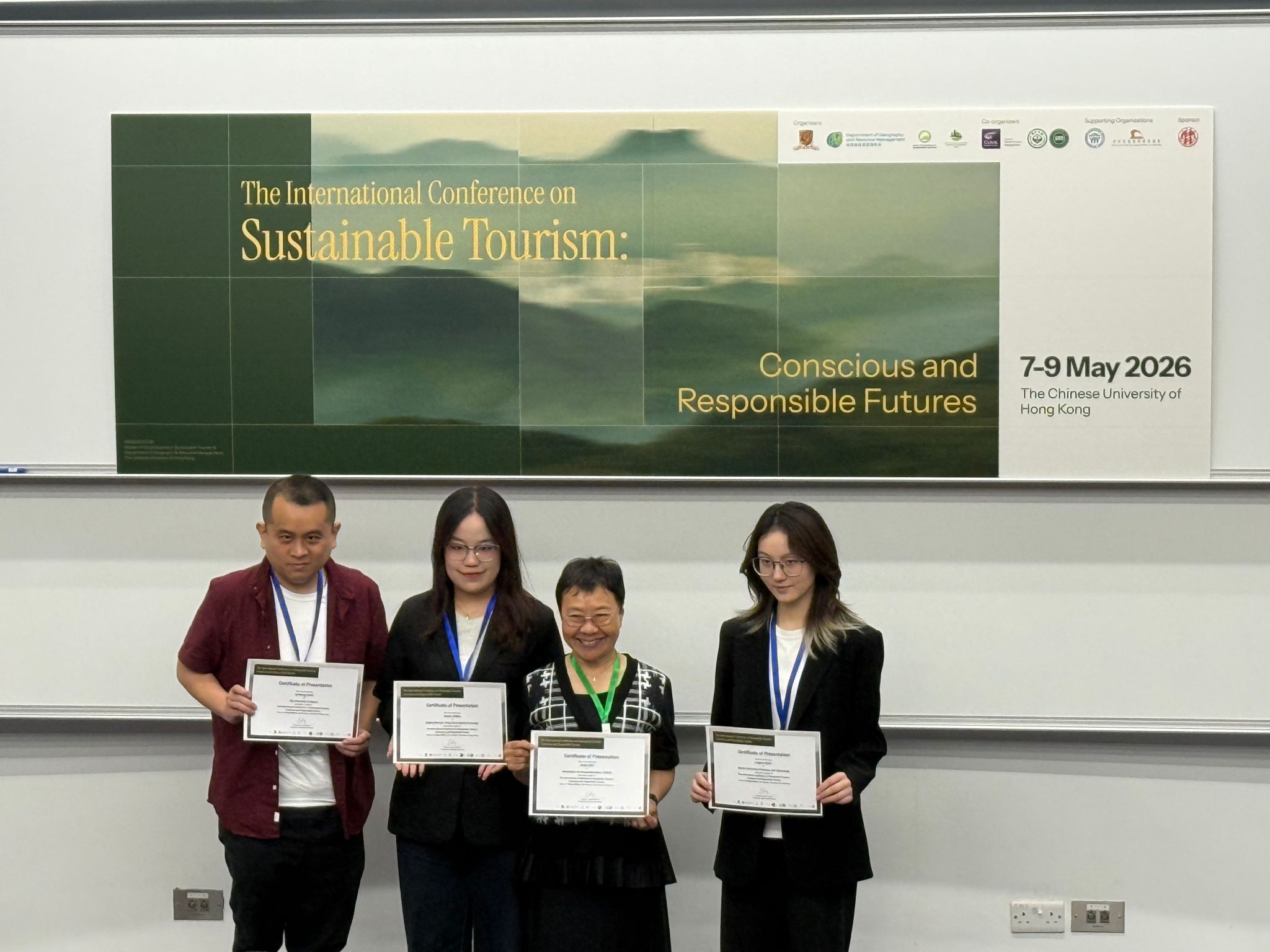
Second from left: Wang Runmo, THEM programme student
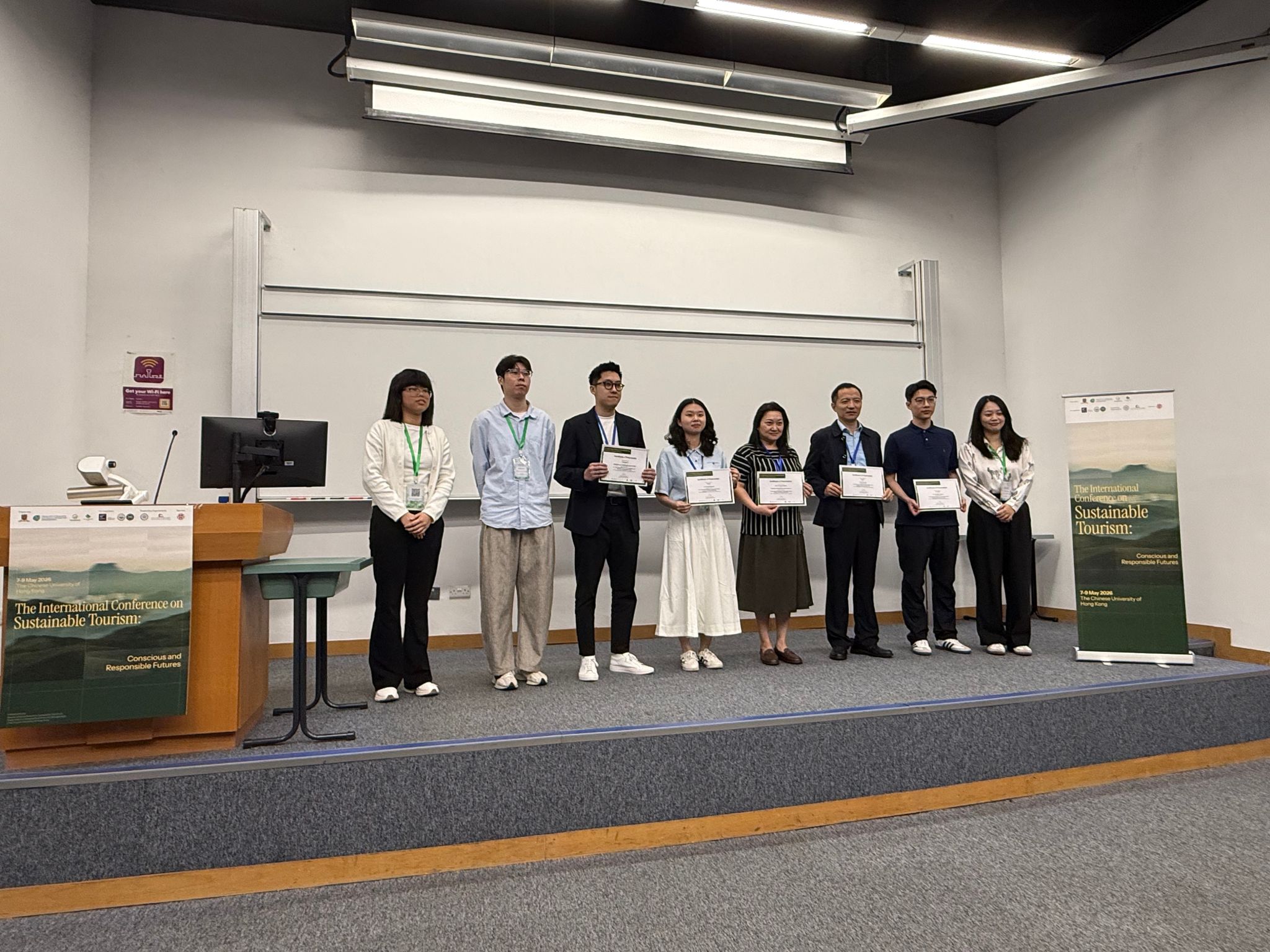
Third from left: Lin Yincheng, THEM programme student
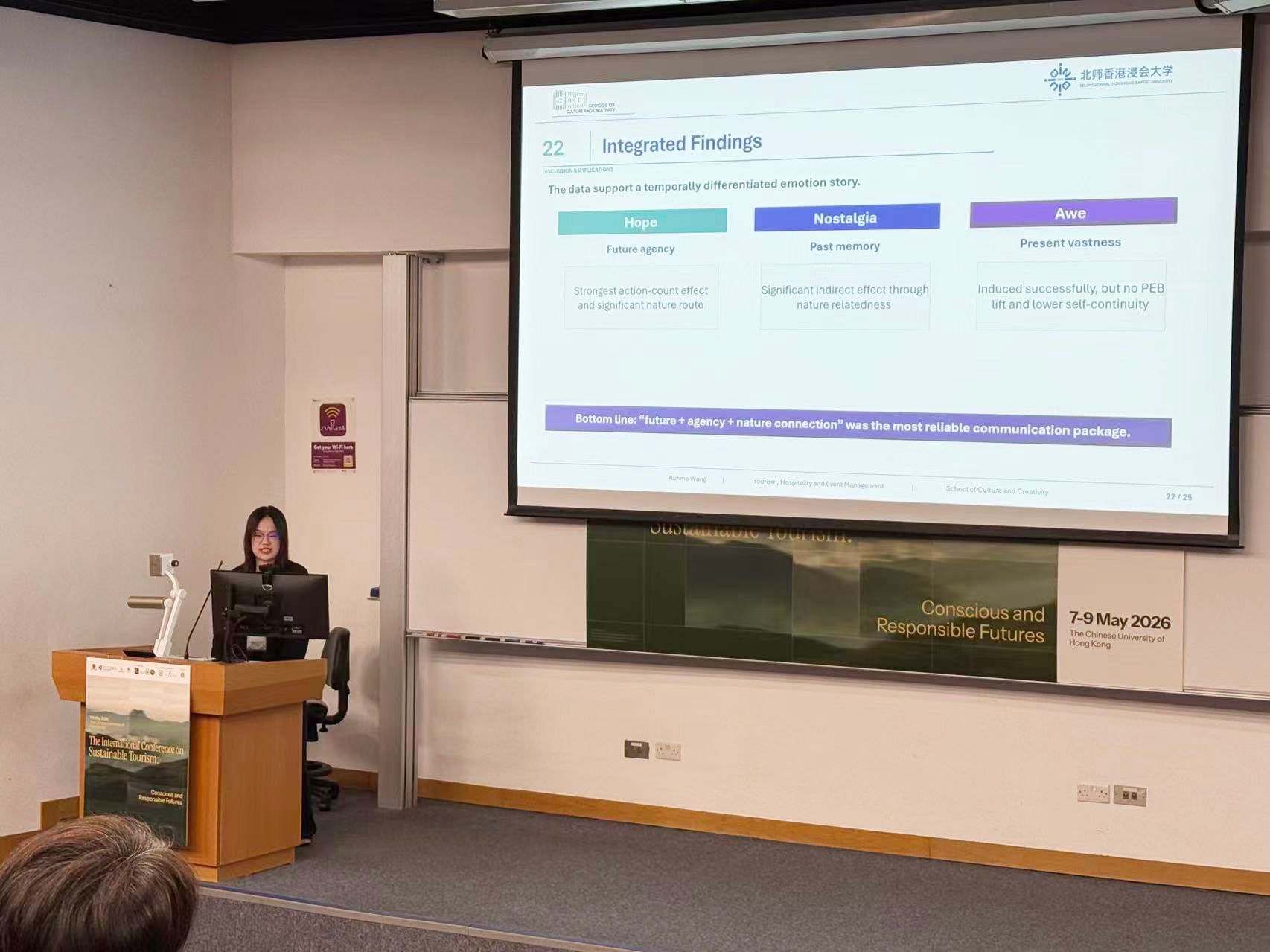
Wang Runmo: Temporally Oriented Emotions Shape Tourist Pro-Environmental Behavior
Which emotion best motivates tourists to act sustainably: awe, nostalgia, or hope? Wang Runmo's paper From Past to Future: Temporally Oriented Emotions Shape Tourist Pro-Environmental Behavior found that future-oriented hope most effectively increased sustainable behavior through nature relatedness, past-oriented nostalgia showed an indirect effect, while present-focused awe, despite being successfully induced, failed to do so. This suggests that the right emotional framing can make sustainable tourism communication far more effective.
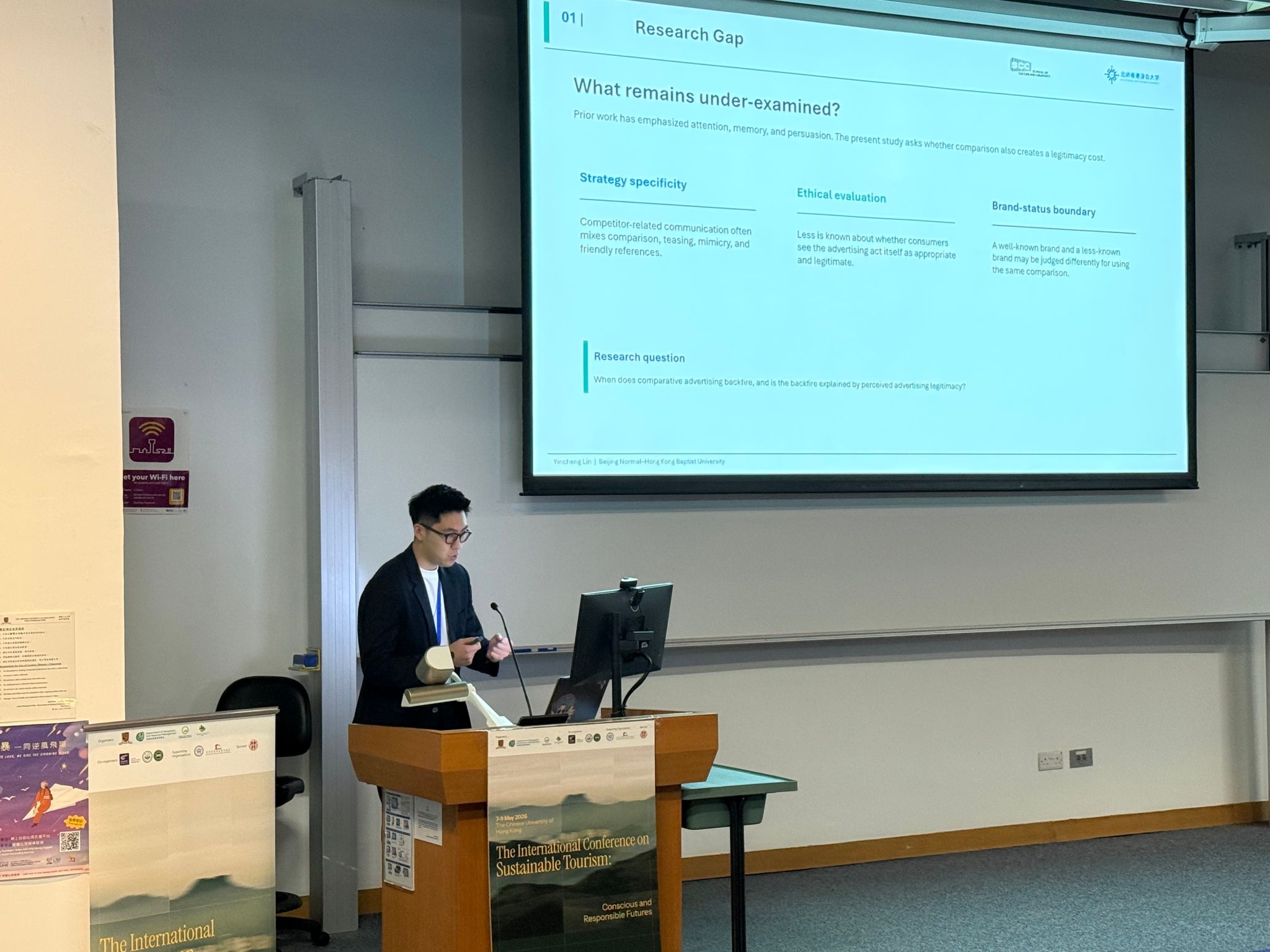
Lin Yincheng: The Hidden Cost of Comparative Advertising for Hospitality Brands
How do consumers react when brands call out competitors? Lin Yincheng's paper Responsible Competitive Communication for Hospitality Brands: Evidence from Comparative Advertising found that comparative advertising, while attention-grabbing, consistently increases perceived aggressiveness, undermines perceived brand legitimacy, and lowers purchase intention. This negative effect is particularly pronounced for well-known brands, but weaker for less-known ones. For tourism and hospitality firms, consumers evaluate not just product claims but also the ethics of competitive conduct, suggesting caution when employing comparative strategies in public communication.
Both studies address ethical communication and sustainable tourist behavior, closely aligned with the 14th International Sustainable Tourism Conference's theme of "Conscious and Responsible Futures." This prestigious academic platform, which brings together scholars worldwide, stands as a testament to BNBU students' active exploration and international presence in the field of sustainable tourism research. Additionally, both studies were supported by BNBU Research Grants (Nos. UICR0700122-25 and UICA0100014).
Text: Wang Weilu
Photos: Wang Runmo, Lin Yincheng
Editor: Wang Weilu
