[CCM Cultural Industry Field Trip] Shenzhen Art Museum (New Venue)
On May 10, 2026, students enrolled in Cultural Policy, Economy, and Development, as well as AI in Creative Industries courses have visited Shenzhen Art Museum (New Venue) for observation and learning, under the guidance of Programme Director and Associate Professor Dr. Xi Wang and Assistant Instructor Yi Xie from Culture, Creativity, and Management Programme.
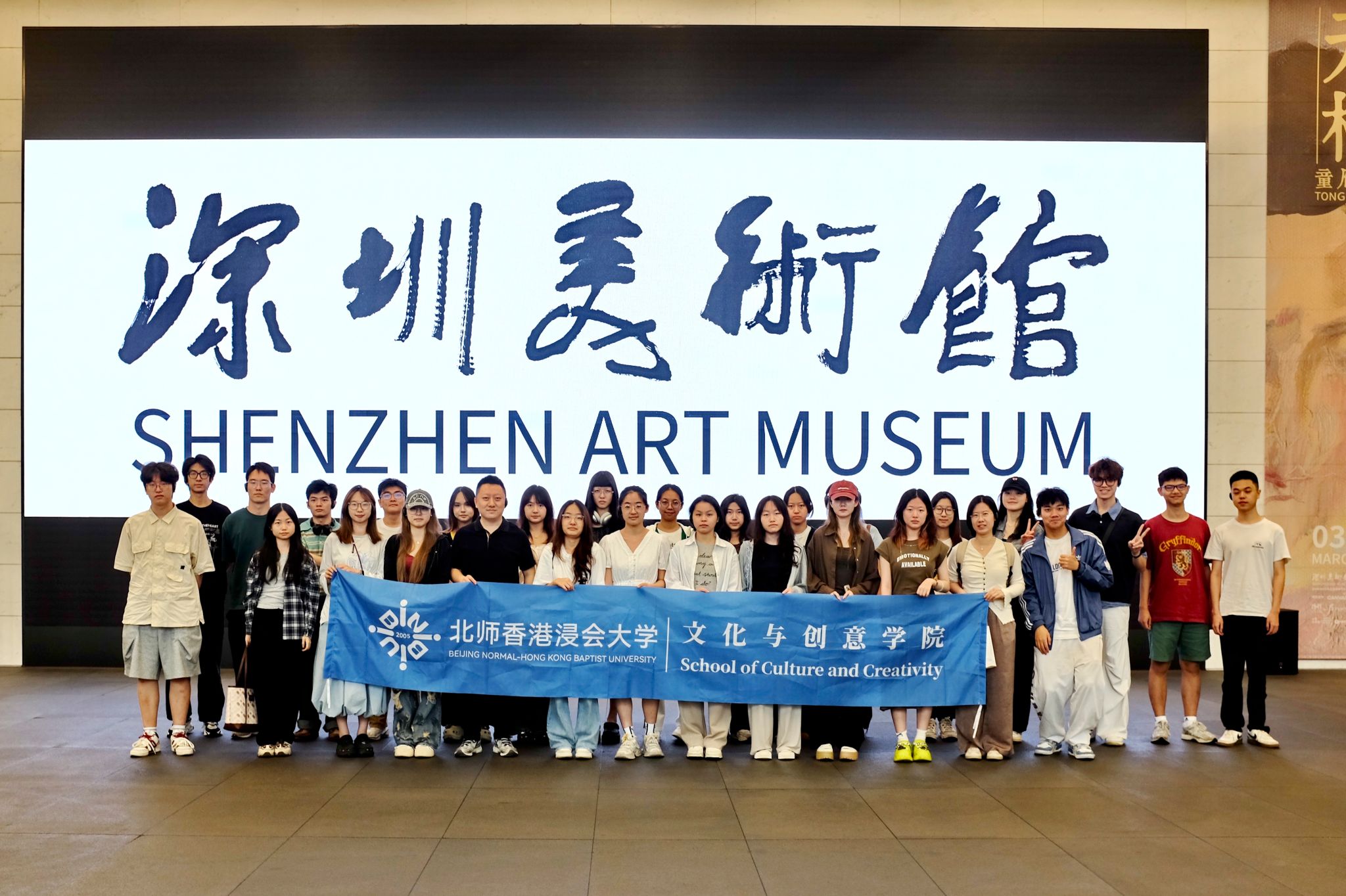
Group Photo
To promote the urban cultural development and expand culturalofferings to meet the city’s needs, Shenzhen Art Museum (New Venue) has been opened for trial operation in September 2023. Located at the Shenzhen geographical center and the developing axis of Guangdong-Hong Kong-Macao Greater Bay Area, it has the cultural radiation capacity to connect the south and expand to the north. The new venue occupies 66,000 square meters, with 16,000 square meters of exhibition space, 18 art exhibition halls, and a series of optimized supporting facilities. The museum possesses approximately 9,000 pieces of various art works, forming a collection characteristic mainly featuring works by contemporary masters and outstanding local and GBA artists.
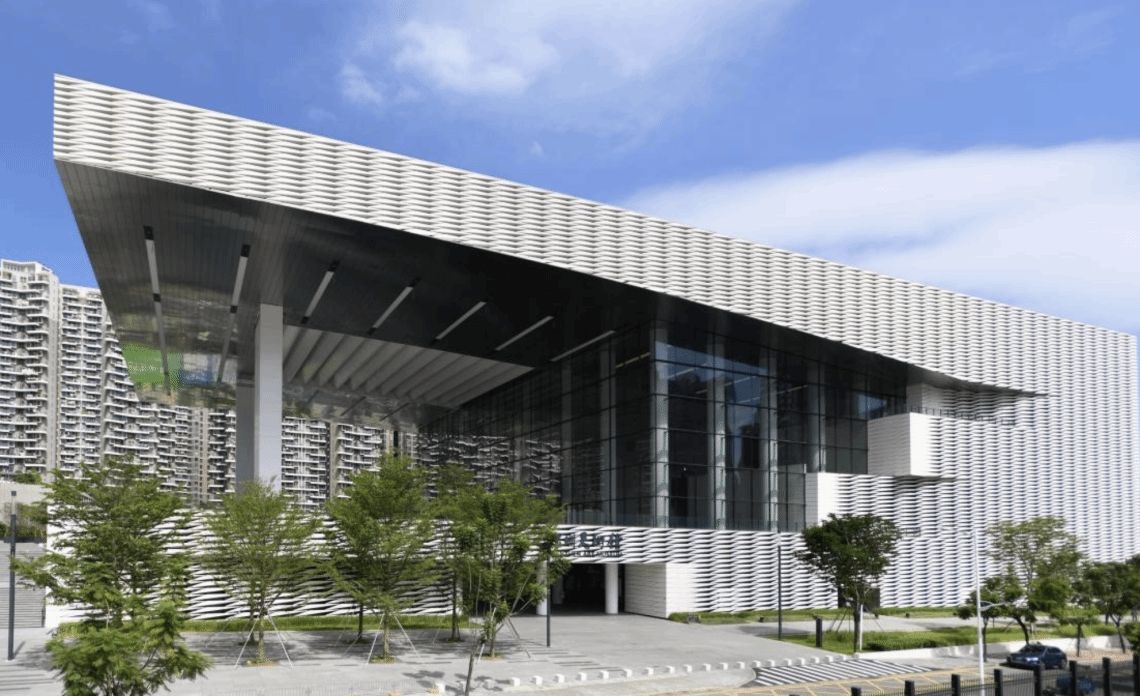
Shenzhen Art Museum (New Venue)
Students initially entered into the “Formless: Tong Yanrunan Exhibition”. In an era where artistic concepts are rapidly changing, Tong Yanrunan chose to confront the most fundamental core of portrait art, namely, the existence of human beings. In the 13-meter-tall cylindrical installation at the center of the exhibition hall, over one thousand portraits of uniform size were densely arranged like “a thousand Buddha caves”, creating a powerful visual impact that touches the heart. The dedicated “face-to-face” ritual was a series of brief but profound spiritual exchanges. At the same time, he also explored the construction of a bridge for cross-culture dialogue, using Western oil painting language to interpret the cosmology and philosophy rooted in Chinese art.
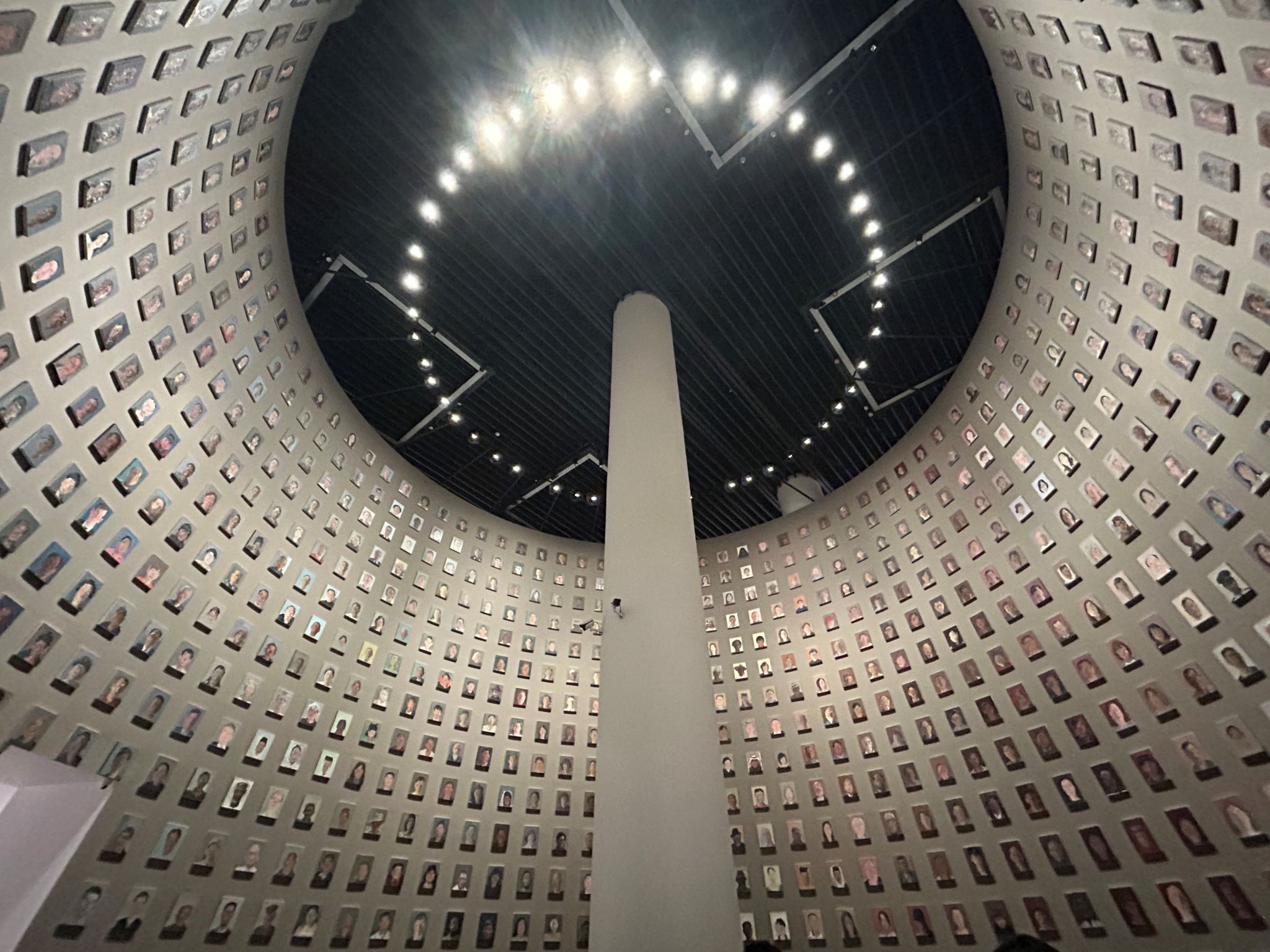
The cylindrical installation of the exhibition “Formless”
The students also visited the exhibition “Carrying Cultural Art: An Exhibition of Chinese Epigraphic Rubbings Through the Ages”. From the inscriptions on bronze from the Shang and Zhou dynasties to the robust character of Qin and Han steles, from the spirited epitaphs of the Wei and Jin periods to the grand majesty of Tang and Song cliff carvings, each paper rubbing appeared like a long scroll of the unbroken cultural lineage of Chinese civilization, leaving the students in awe. Even after the visit, they were eager for more, attempting to replicate the rubbings as part of their learning experience.
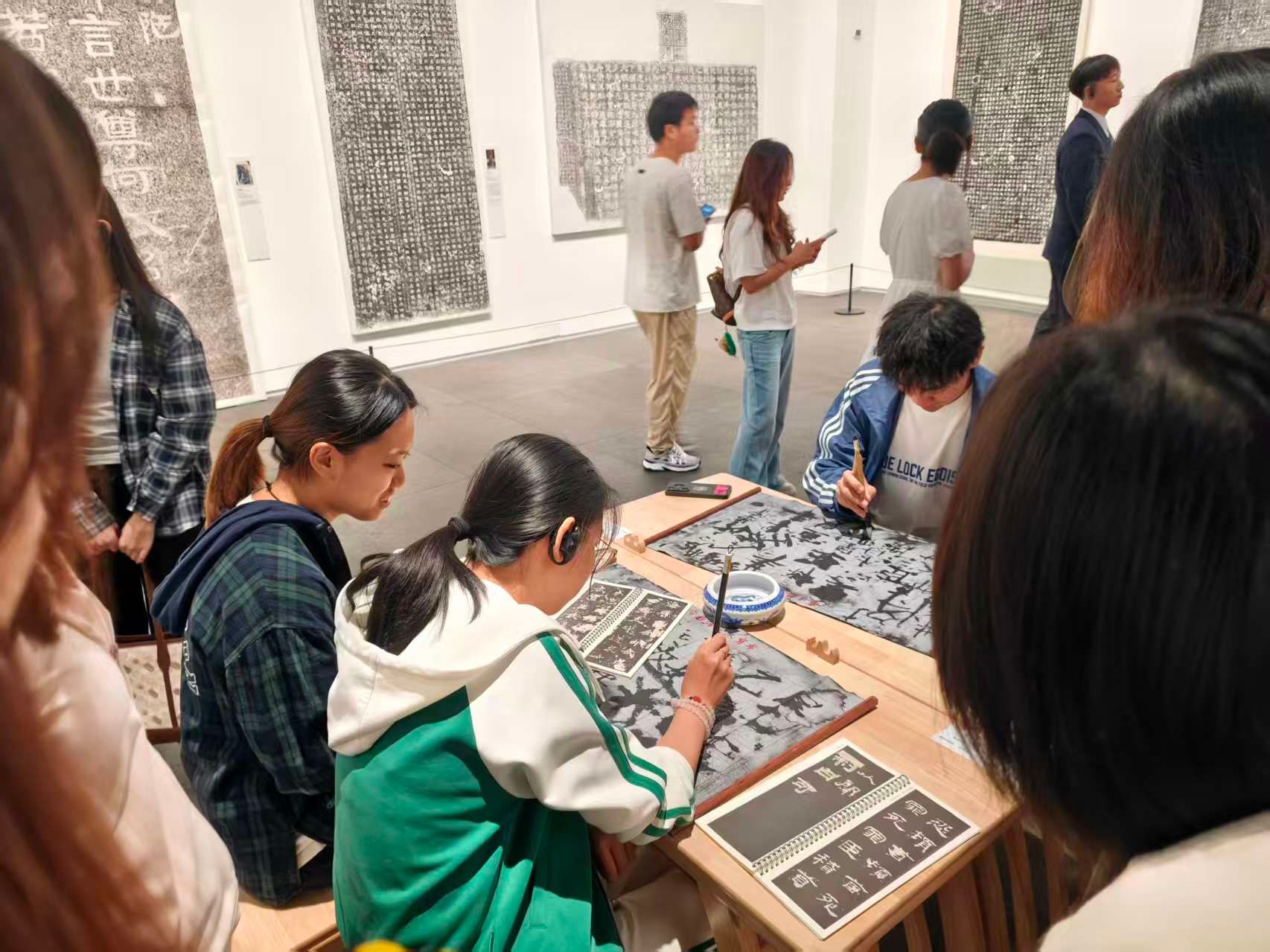
Students were copying the rubbings
Despite being immersive in the spiritual world of art, students also explored the cross-border integration of museum and art museum.“The Realm of Fossils: An Epic of LifeA Paleontological Exhibition from Hezheng, Linxia, Gansu Hoofprints Through Time: the Evolution from Hipparion to True Horse” follows the timeline of the evolution of horses as the main theme. The five core exhibition areas tell the story of the alternation of the hipparion and the true horse fauna, allowing students to understand intuitively of the intelligent transformation of life in response to environmental changes.
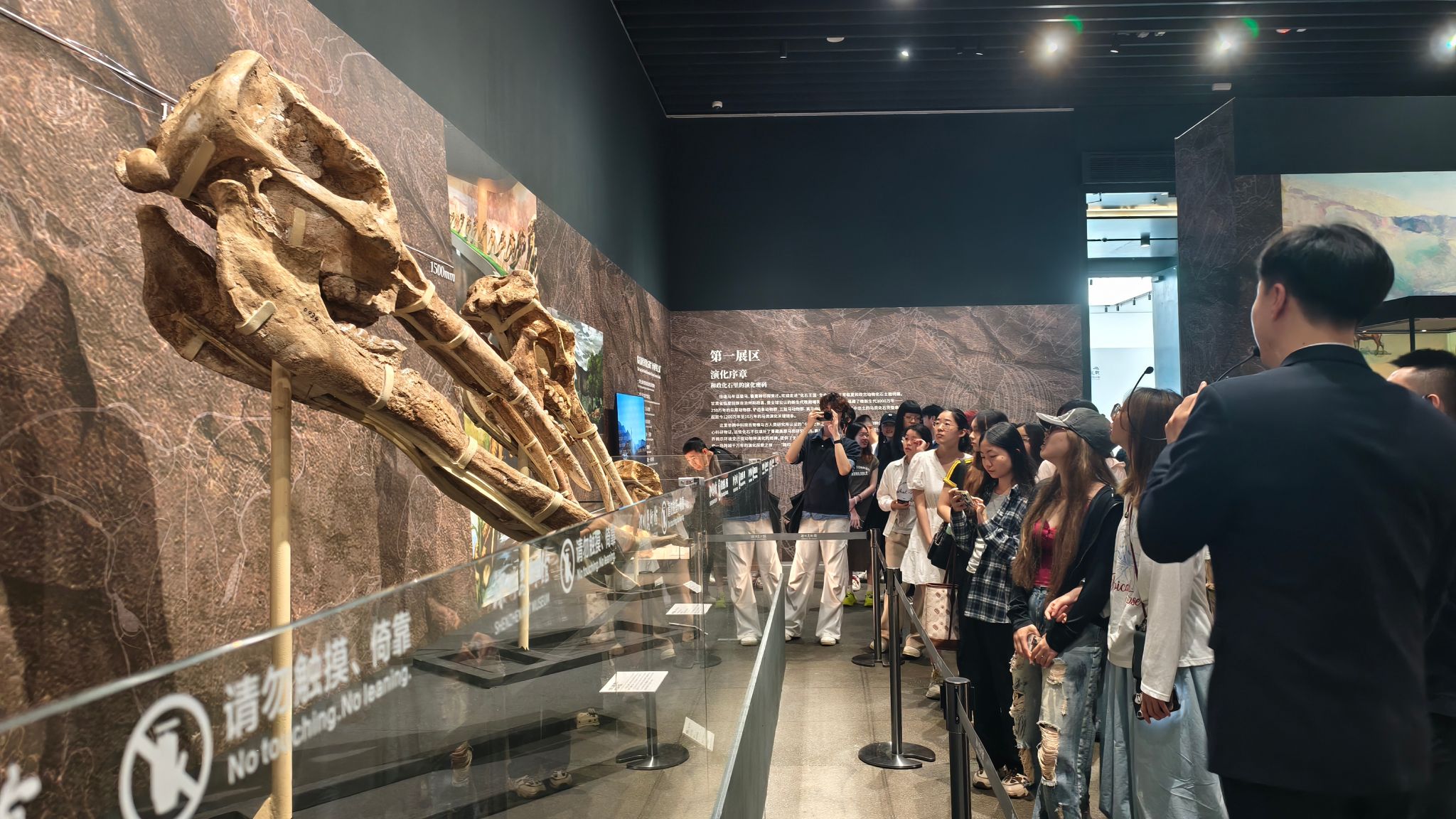
The exhibition guide was introducing the stories of fossils to the students
Through this visit, students not only strengthened their understanding of the course content, but also gained a new perspective on art. Art can transcend the concrete, space and time, reach the spiritual core and trigger thoughts about the true nature of life. Additionally, the relationship between museums and art museums has evolved from simple resource sharing to deep integration, which helps to form a more inclusive and innovative cultural communication system and brings audiences a richer and more diverse cultural experience.
Text: Xuantong Lin
Photo: Xuantong Lin, Xi Wang, Yi Xie
Edit: Yi Xie
