THEM's First Origins & Horizons International Symposium Wraps Up: Shadow Puppetry Heritage in Tradition and Contemporary Dialogue
On April 24, 2026, the first edition of the Origins & Horizons International Cultural Symposium took place at the Fung Sun Kwan Lecture Hall (T2-101). Themed "Between Light and Shadow," the symposium examined shadow puppetry as a living intangible cultural heritage. Hosted by the Tourism, Hospitality and Event Management (THEM) programme of the School of Culture and Creativity at Beijing Normal-Hong Kong Baptist University (BNBU), the symposium was co-organized by the CPC Branch of FHSS & SCC and the Shadow Puppetry Gallery of the School of General Education.
The symposium brought together six leading specialists, scholars, and master practitioners from Liaoning, Beijing, Hubei, Hunan, and Guangzhou for an in-depth discussion of how this centuries-old art is being preserved, reimagined, and carried forward.
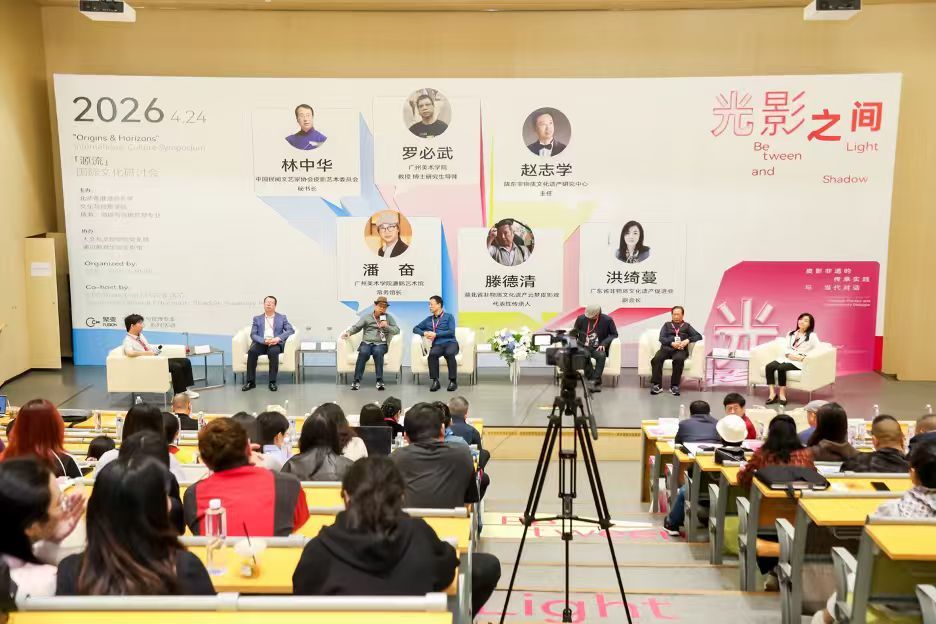
Origins & Horizons is a newly established symposium series from the THEM programme, conceived as a recurring forum that traces cultural origins and connects disciplines, generations, and modes of practice. This first edition also forms a key academic strand of the 2026 CCM annual exhibition, FUSION · Masterpiece. Each future edition will address a major intangible cultural heritage topic, building toward a flagship academic platform linking the Chinese mainland, Hong Kong, and Macau on heritage matters.
Established in 2011 under the direction of Mr. Teng Deqing, a recognized inheritor of the Yunmeng (Hubei) shadow puppetry tradition, BNBU's Shadow Puppetry Art Museum remains the only university-based shadow puppetry museum in Guangdong Province. Its collection, spanning multiple regional schools and styles, has long underpinned the School's heritage research and teaching. Origins & Horizons builds directly on this foundation, extending the School's work in the field of intangible cultural heritage.
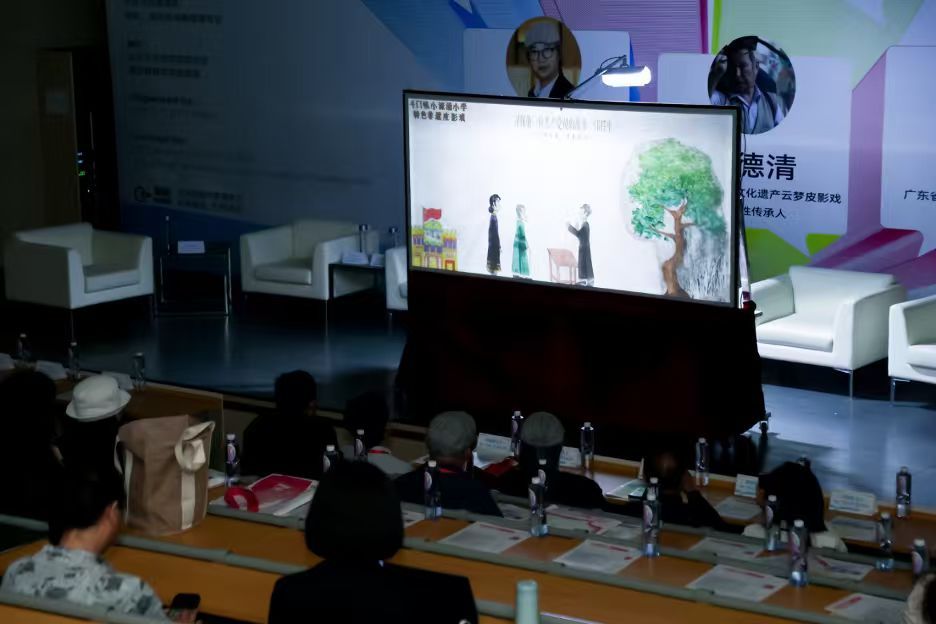
The day opened with a performance by Zhuhai’s Xiaohaochong Primary School Shadow Puppetry Troupe, presenting their original work, In Search of the First Communist: Kuang Yansheng, Light of Truth, Fire of Youth.
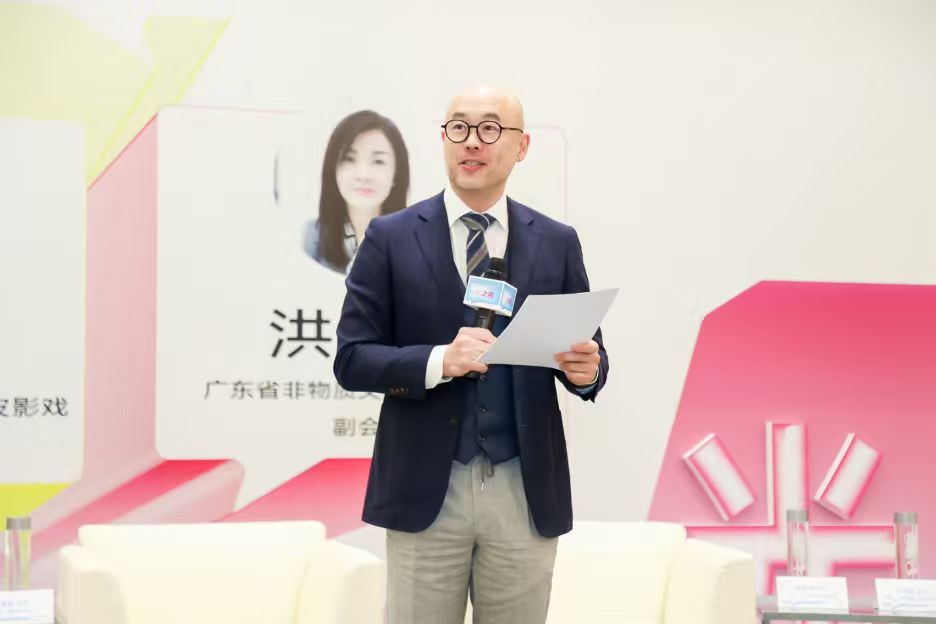
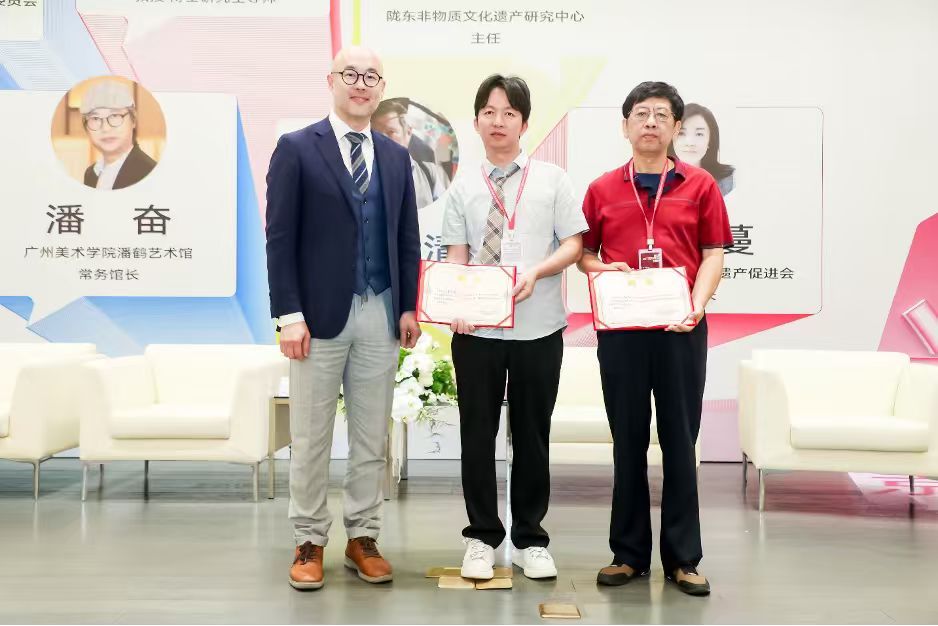
In his opening remarks, Prof. Eugene Ch'ng, Dean of the School of Culture and Creativity, described shadow puppetry as far more than a craft, but as a living civilization written and rewritten across generations. He then presented Expert Certificates to symposium advisor Mr. Wang Dianlin and roundtable moderator Mr. Allen Xie.
The roundtable was moderated by Mr. Xie, head of the Yi Ming Tang Shadow Puppetry Art Hall. Panellists included Lin Zhonghua, Secretary-General of the Shadow Puppetry Committee of the China Folk Literature and Art Society; Luo Biwu, Professor and Doctoral Supervisor at the Guangzhou Academy of Fine Arts; Zhao Zhixue, Professor at Longdong University and Director of its Intangible Cultural Heritage Research Centre; Pan Fen, Executive Director of the Pan He Art Museum at the Guangzhou Academy of Fine Arts; Teng Deqing, a recognized inheritor of Yunmeng shadow puppetry (Hubei); and Hong Qiman, Vice-Chair of the Guangdong Intangible Cultural Heritage Promotion Association.
Drawing on perspectives spanning academic research, artistic practice, lived transmission, and cultural policy, the panelists explored the current state and future of shadow puppetry as intangible cultural heritage.
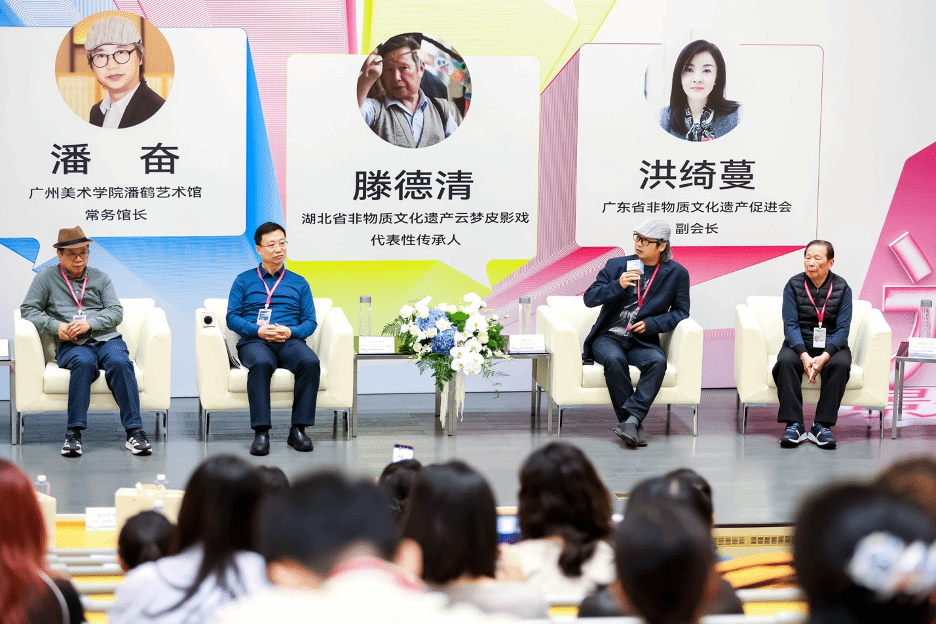
On contemporary value, the panel described shadow puppetry as one of the most vital living traditions in Chinese folk art: narratively rich, inherently interactive, and still deeply tied to the emotional fabric of rural communities and to vernacular storytelling.
On the challenges of transmission, speakers were candid: shrinking performance markets, weak economic support, and broken inheritance lineages are pressures faced by most of China's intangible heritage traditions.
On paths forward, the panel reached several points of consensus: innovation rooted in fidelity to tradition , heritage education in schools, and collaborative models linking folk practitioners, universities, and industry. Panellists stressed that industrialisation is not commercialization, and that any contemporary adaptation must preserve the artistic core. AI-assisted creation, digital design, and light engagement with urban public life were highlighted as promising directions.
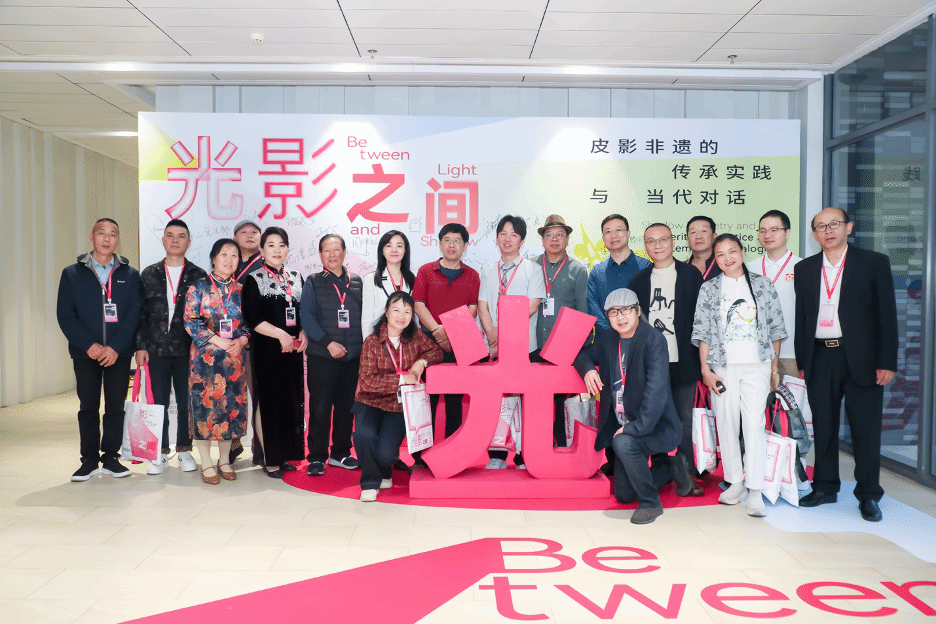
The Origins & Horizons symposium also connects with a flagship research initiative at BNBU. Led by Associate Professor Wang Xi, Head of the CCM Programme, and supported by the Guangdong–Hong Kong Universities 1+1+1 Joint Funding Scheme, AI-Mediated Archives (AMA) is a cutting-edge project from the School of Culture and Creativity, situated at the intersection of the humanities and artificial intelligence. It asks: When AI enters the cultural archive, can film, oral history, and performance records take on new narrative life? And when trained on the living forms of shadow puppetry, opera, and folk art, can AI become another kind of storyteller alongside human inheritors?
By connecting the symposium with the AMA project, the School aims to chart a new path for heritage preservation and revitalisation at the intersection of the humanities and AI.
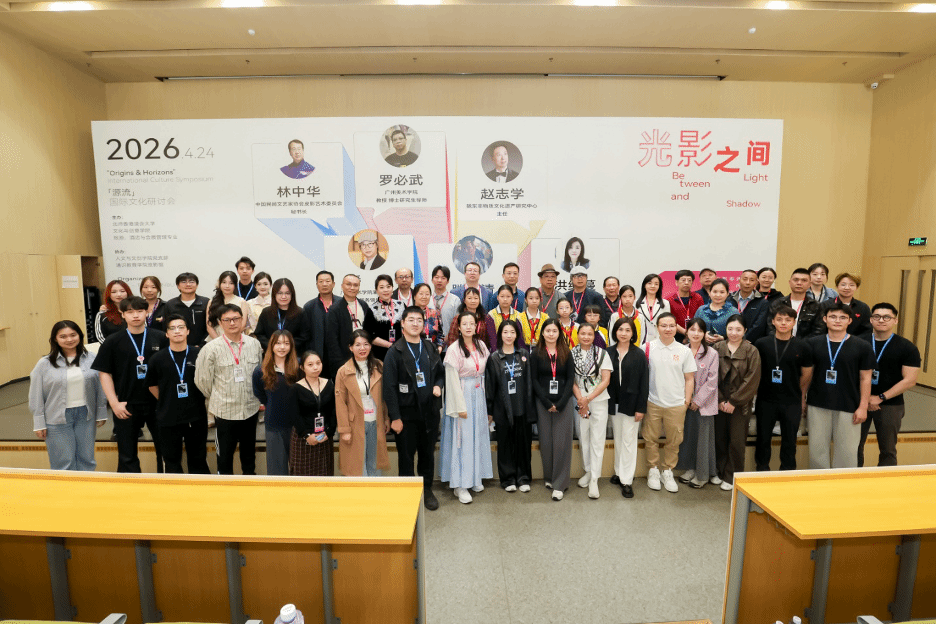
The symposium closed with a group photograph.Between light and shadow, the story of this ancient art is being written anew.
Words: Liu Minhao
Editor: Wang Weilu
Photography: Sam
