Professor Eugene Ch’ng Elected Fellow of the Society of Antiquaries
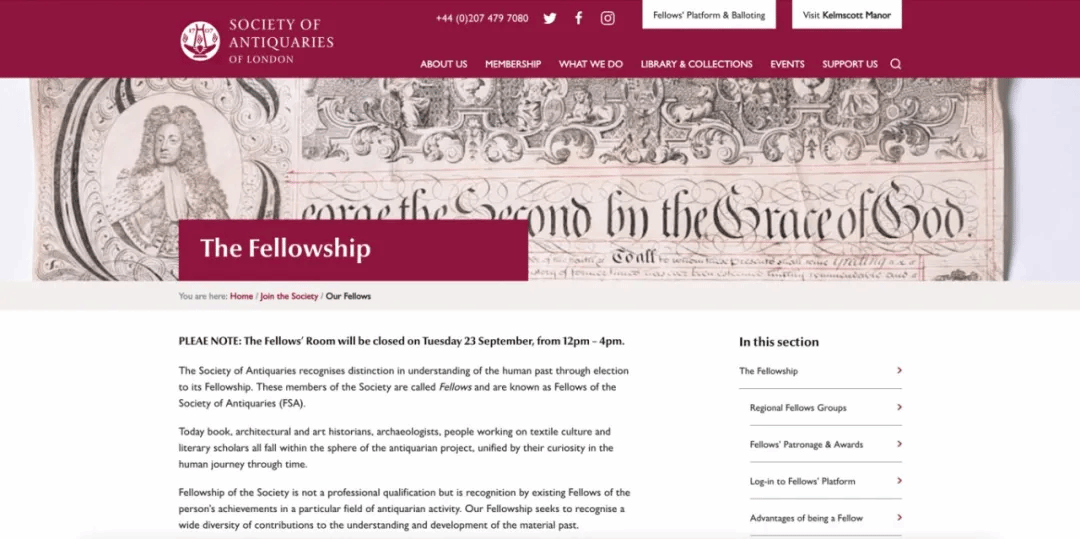
The Society of Antiquaries
The Society of Antiquaries of London (founded 1707; Royal Charter 1751) is a learned society dedicated to advancing the study of the material past—archaeology, art, archives, and historic buildings—primarily of Britain and its global connections. Based at Burlington House, Piccadilly, it elects Fellows who use the post-nominal FSA through a rigorous peer-election process, a mark of distinction that signals scholarly excellence and professional leadership in heritage fields. The Society maintains a renowned research library and collections, runs lectures and conferences, awards research grants, and publishes The Antiquaries Journal. It also stewards heritage places such as William Morris’s Kelmscott Manor. Together, its long history, Royal Charter status, influential publications, and selective Fellowship confer a prestige that makes it one of the world’s foremost authorities on cultural heritage.
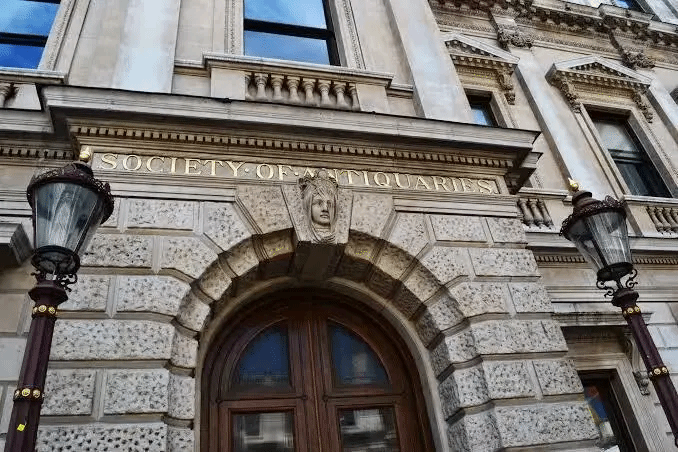
The Society of Antiquaries of London is a learned society dedicated to advancing the study of material culture. Its research scope covers archaeology, art, archives, and historic buildings, with a particular focus on Britain and its global connections. Headquartered at Burlington House in Piccadilly, London, the Society elects its Fellows through a rigorous peer-reviewed nomination and election process. Those elected may use the post-nominal letters “FSA” (Fellow of the Society of Antiquaries) after their names.
About the Fellowship
Election to the Fellowship recognizes substantive contributions to archaeology, history, and heritage. Candidates are nominated by an existing Fellow, supported by five to twelve additional Fellows, and elected by secret ballot requiring at least two affirmative votes for every negative vote.
Recognition
Professor Ch’ng was elected for his pioneering contributions to digital heritage, advancing documentation, interpretation, and preservation through computational and XR methodologies.
Nomination
Professor Ch’ng was nominated by Professor Vince Gaffney amongst five additional fellows. Professor Gaffney is the 50th Anniversary Chair in Landscape Archaeology at the University of Bradford. Professor Gaffney’s current projects include the ERC-funded Synergy project, SUBNORDICA, and the Stonehenge Hidden Landscapes Project. His international portfolio spans Europe, America, and Africa and has been recognized with the European Archaeological Heritage Prize, the Queen’s Anniversary Prize (1996 and 2022), and an MBE (2018) for services to scientific research.
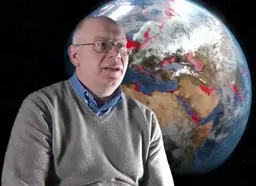
Prof Vince Gaffney, 50th Anniversary Chair in Landscape Archaeology
Selected Fellows (past & present)
The Fellowship includes Sir David Attenborough, the naturalist and broadcaster whose landmark documentaries advanced global understanding of biodiversity and conservation; Sir Walter Scott, the novelist and poet whose historical romances shaped modern historical fiction and public engagement with heritage; Simon Russell Beale, an acclaimed stage and screen actor and presenter known for interpretive work on Shakespeare and theatre history; Colin Renfrew, Baron Renfrew of Kaimsthorn, a pioneering archaeologist of European prehistory and influential theorist (notably in cognitive archaeology and scientific dating); Leonardo López Luján, the Mexican archaeologist and Director of the Templo Mayor Project, leading research on the Aztec ceremonial precinct; and Eduardo Matos Moctezuma, the renowned Mexican archaeologist whose foundational excavations at Templo Mayor transformed scholarship on Aztec civilization.
Professor Ch’ng is a leading scholar at the intersection of computational culture and heritage and XR technologies. He is founding director of the BNBU Centre for Computational Culture and Heritage and the NVIDIA Deep Learning Institute (as NVIDIA University Ambassador); Editor-in-Chief of PRESENCE: Virtual and Augmented Reality (MIT Press); and previously founding director of the IBM Visual and Spatial Technology Centre and Digital Humanities Hub (University of Birmingham, 2011–2013), and the NVIDIA Joint-Lab on Mixed Reality (University of Nottingham Ningbo China, 2016–2023). His work has secured competitive funding in the UK, Europe, and China, yielded £4m in research and industry grants, and produced 145+ publications, including two influential volumes—Visual Heritage in the Digital Age and Visual Heritage: Digital Approaches in Heritage Science. He has presented twice at the Royal Society (Summer Science Exhibition; Theo Murphy Scientific Meeting, 2017), delivered 40+ international exhibitions of art and computational media/XR, appeared on National Geographic and Channel 4’s Time Team Special, served as a global consultant for the V&A ReACH initiative (contributing to the review and redraft of Henry Cole’s 1867 Charter and technical policy), and received distinctions including the Ningbo Municipal Individual 3315 Talent Award (2015) and Minjiang Scholar (2022). He is listed among Stanford’s Top 2% most-cited scientists.
Significance. The Fellowship confers peer-validated distinction and entry into a historic scholarly community that advances research, conservation, and public engagement with the past.
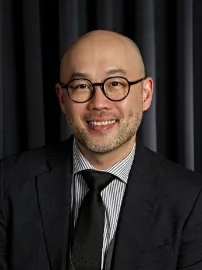
Professor Eugene Ch’ng is a leading scholar in digital heritage whose work bridges computational methods, immersive VR/AR storytelling, and museum innovation to preserve, reconstruct, and communicate cultural heritage at scale. His research—spanning crowdsourced photogrammetry, social/affective analytics, human–computer interaction, and heritage management—has been published in the top journals in the field: ACM Journal on Computing and Cultural Heritage; ACM Transactions on Computer-Human Interaction; ACM Transactions on Multimedia Computing, Communications, and Applications; Applied Artificial Intelligence; Complexity; Computers in Human Behavior; Electronics; Nature Humanities and Social Sciences Communications; IEEE Computer; IEEE Computer Graphics and Applications; Industrial Management & Data Systems; International Journal of Cultural Policy; International Journal of Human-Computer Studies; Internet Archaeology; Journal of Archaeological Science; Journal of Cultural Heritage; Journal of Cultural Heritage Management and Sustainable Development; Nouvelles Assyriologiques Brèves et Utilitaires (NABU); Museum Management and Curatorship; Simulation; and Social Sciences & Humanities Open.
