
On the afternoon of 14 November 2026, the student-faculty co-creation project team of the Culture, Creativity and Management (CCM) programme held the "Huitong Treasure Hunt: The Comprador's Secret Archives" activity on the theme of "The Digital Transformation of Zhuhai Ancient Village IPs". With the theme "Digital Treasure Hunt · Ancient Village Exploration", the activity combined an online mini-programme with offline stamp collecting and booth interactions, leading visitors into this Lingnan ancient village with a history of nearly three hundred years in the role of "apprentice compradors".
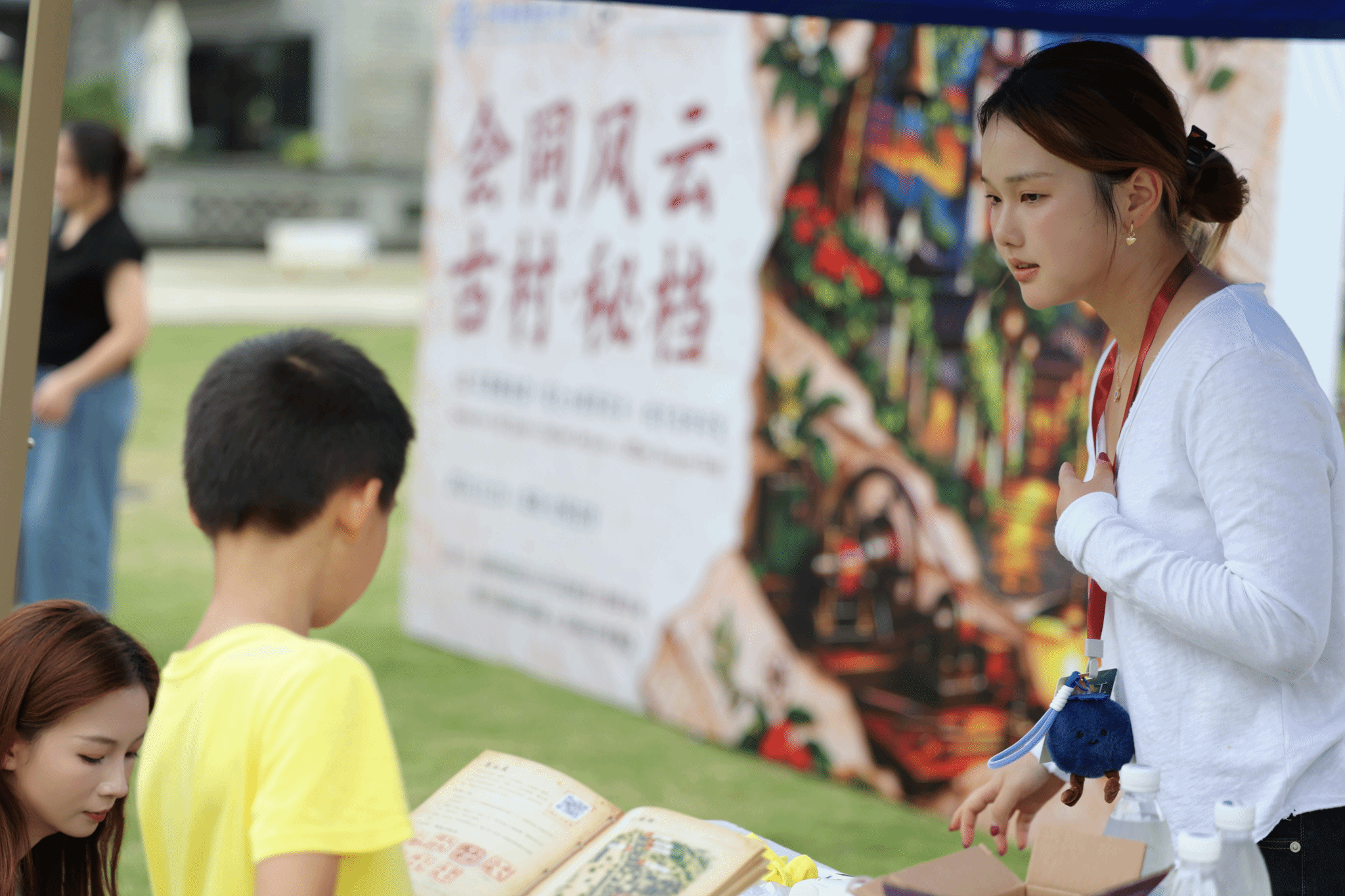
Participating families collected the "Comprador's Secret Archives · Companion Handbook" at the base camp
At 3:30 pm, visitors arrived one after another at the base camp on the great lawn of Huitong Ancient Village. After collecting the "Comprador's Secret Archives · Companion Handbook", they used their mobile phones to scan the pattern on the handbook and enter the online mini-programme. The game guide "Manager Mo's" memory is stuck in the fifteenth year of the Republic of China; visitors must start from the South Gate and search the village's three streets and eight lanes one by one to recover six secret archives. Upon completing the task at each stop, on-site volunteers stamp the corresponding page of the handbook, and finally visitors bid farewell to the Manager at the North Gate. Visitors who collect all seven stamps return to the base camp to receive a completion gift.
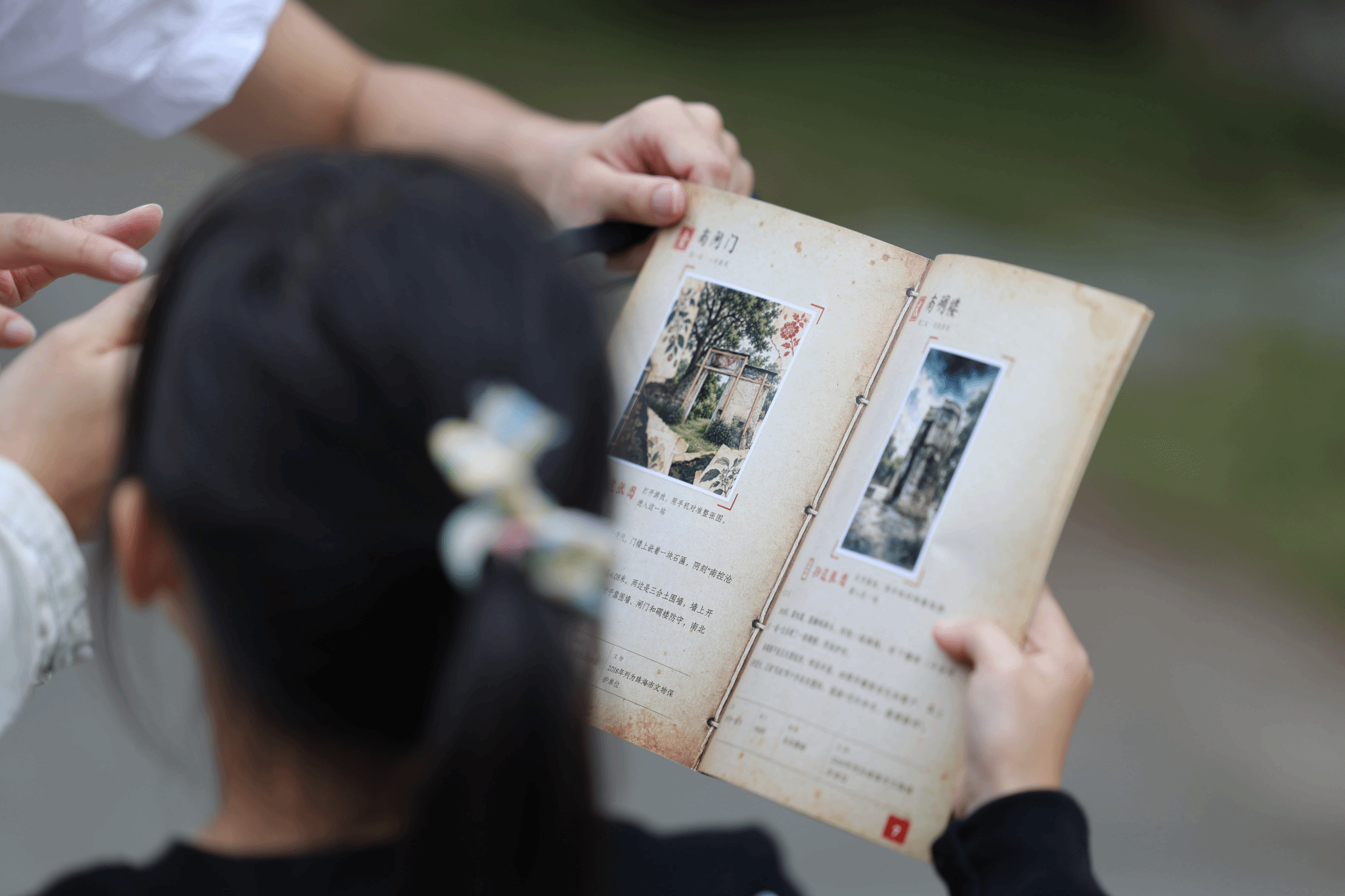
Visitors scan the code at the South Gate to begin the first stop, the "Village Entry Inspection"
To enhance the experience, interactive games were set up at four locations, the South Watchtower, the Mo Clan Ancestral Hall, the Tiaomei Ancestral Hall and the North Watchtower, namely architectural colouring, architectural jigsaw puzzles, poetry matching and sandbag throwing. Children learned about the appearance and features of Huitong's architecture through colouring and jigsaw puzzles, experienced the literary heritage of the Beishan Poetry Society through poetry matching, and enjoyed laughter through the sandbag throwing game; families who completed the games also received small gifts such as squishy toys and keychains.
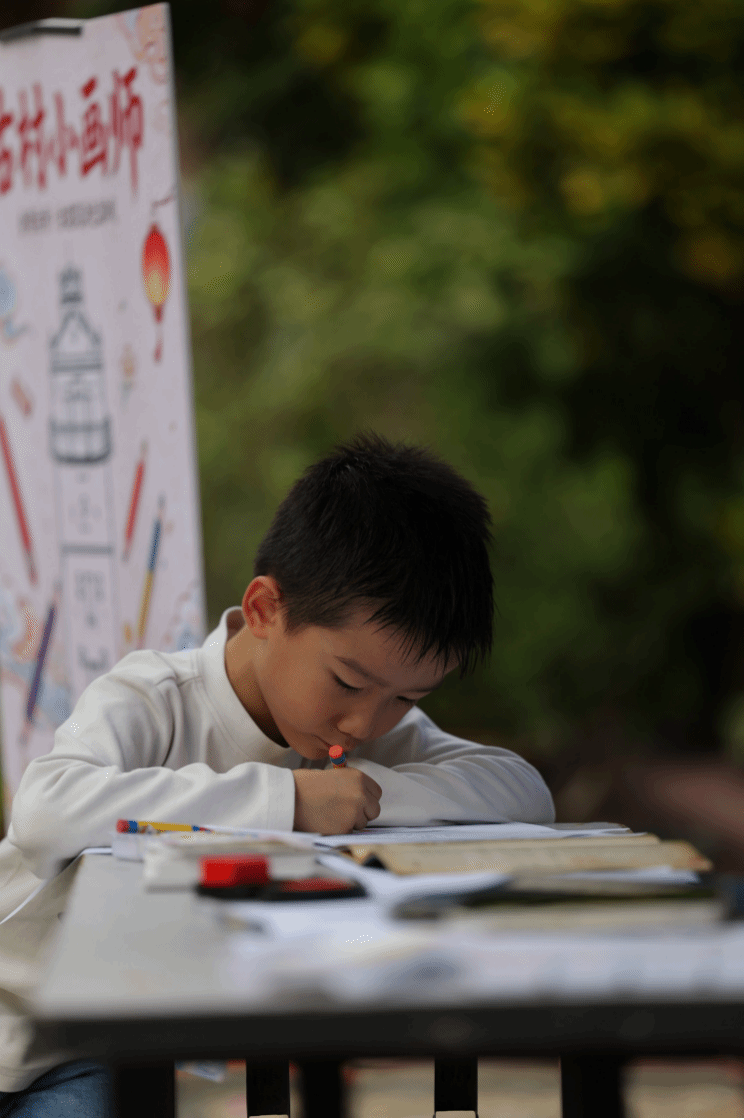
Children colour line drawings of Huitong's architecture at the architectural colouring booth
A Polaroid photo area was also set up at the base camp. Families who completed the on-site questionnaire could take a free photo together and take it away immediately as a memento of this journey through the ancient village. The activity adhered throughout to the principle of "not breaking a single brick or tile": all materials were movable and recyclable, and no ancient buildings were touched or climbed, allowing digital content to be layered over authentic historical settings.
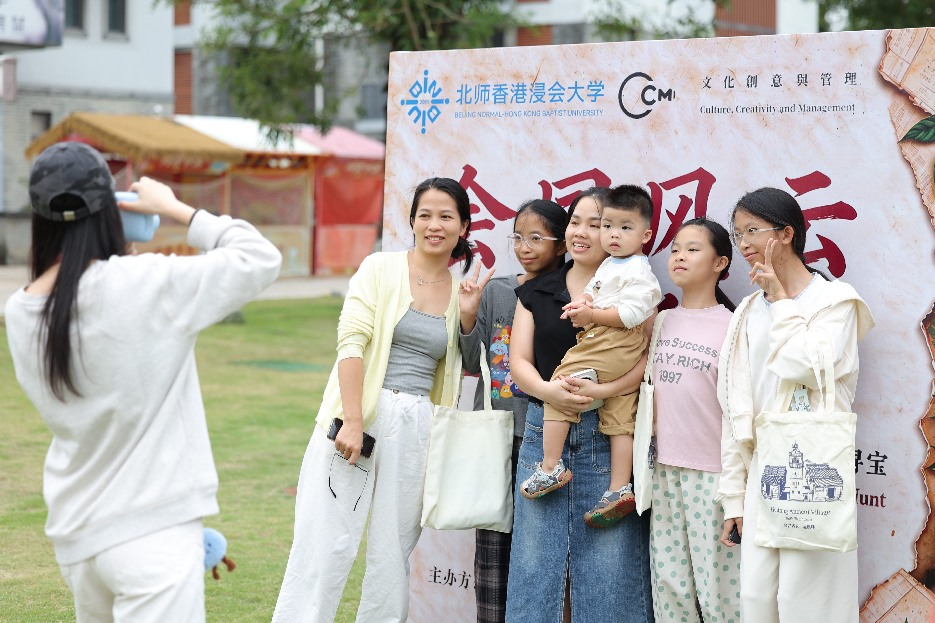
Families who completed the challenge pose for a group photo at the base camp
The atmosphere on the day was lively, and many parents remarked that their children had developed an interest in Huitong's old buildings while completing the challenges, "they memorised the stories while playing".
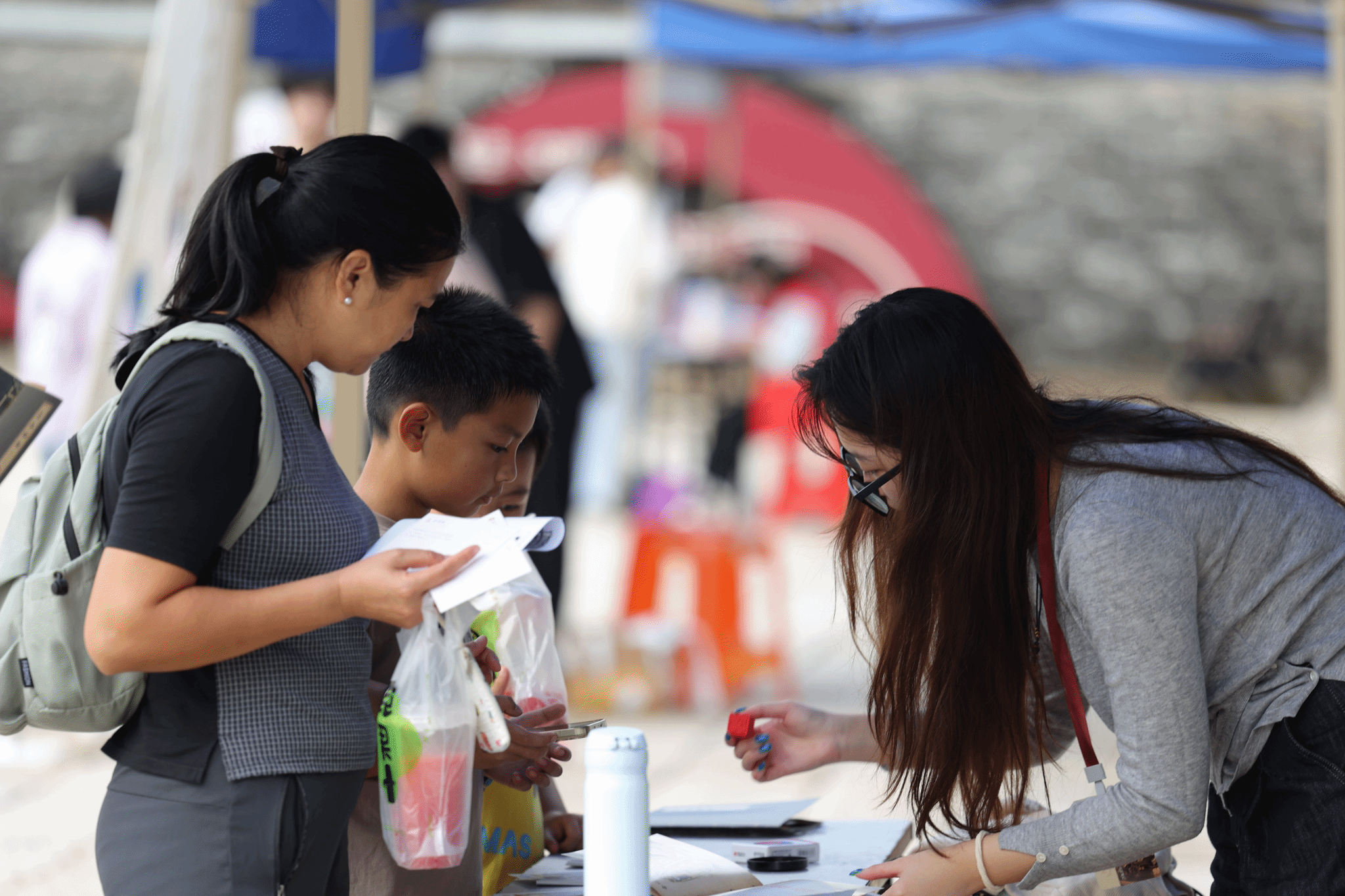
Volunteers stamp the handbooks of visitors who complete the tasks
This activity is the practical outcome of the CCM programme's student-faculty co-creation project "New Rhythms of Ancient Villages · Technology Empowerment". A team of more than ten students completed the planning, design and on-site execution under the guidance of Teacher Wan Wanqi. The project attempts to address the real problems of ancient villages, "scattered narratives, flat experiences and weak dissemination", through lightweight digital means, offering a low-cost, replicable solution for the cultural revitalisation of Zhuhai's ancient villages.
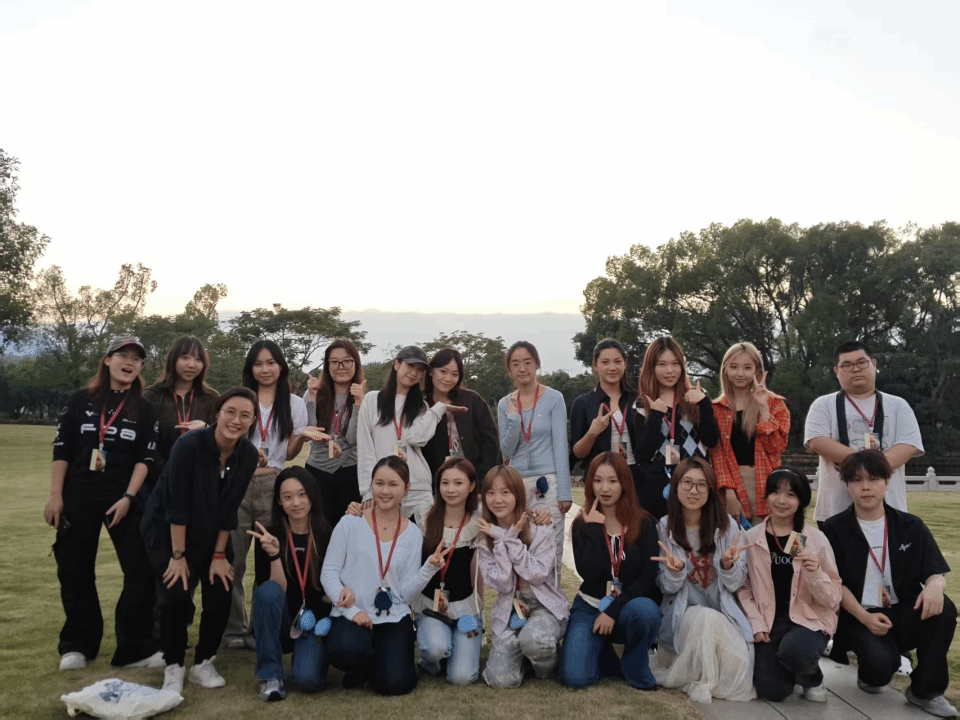
The student-faculty team and volunteers pose for a group photo on site
The activity received strong support from the Huitong community. In the future, the team will continue to optimise the mini-programme and handbook content, and promote "Ancient Village Treasure Hunt" as a sustainable, recurrent campus-community brand activity, so that more people can understand and remember cultural ancient villages through play.
The Student-Faculty Co-Creation Project (CTL Spark Fund) was established in 2025 by the Centre for Teaching and Learning at Beijing Normal-Hong Kong Baptist University (BNBU), aiming to support teachers and students in forming teams to carry out collaborative design and practice around teaching issues. The project encourages interdisciplinary and cross-field collaboration, supports teachers and students in deeply integrating cutting-edge exploration with real teaching scenarios, and promotes "research-informed teaching, teaching-informed learning and mutual growth through teaching and learning", continuously enhancing the teaching and learning experience at BNBU.
Text: Lin Fan, Wan Wanqi
Photos: Zhang Sinan
Editors: Lin Fan, Xie Yi
©2024-2025 Beijing Normal-Hong Kong Baptist University(BNBU).All Rights Reserved.粤ICP备07509519号粤公网安备44049102496044.
