
Choosing a major is not only choosing a set of courses but also choosing a learning method and future development direction. For students who are about to be diverted to new majors, how to understand the true appearance of the major, how to judge whether their interests are consistent with the major, and how to prepare for future study and career planning?
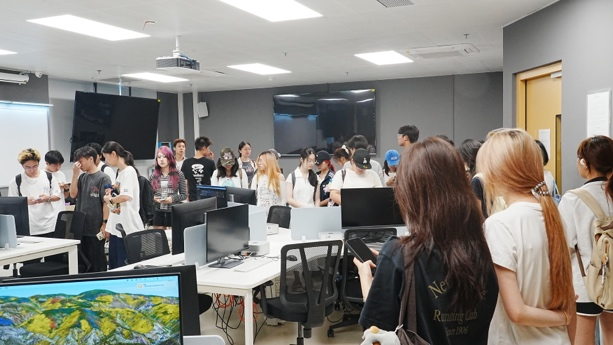
On October 14, 2026, the fourth event of the CTV diversion series - professional meeting was held in CC-128. This event revolves around four links: professional introduction, equipment experience, field visits and graduates’ experience sharing, leading students to get closer to the CTV major, from classroom courses to film and television equipment, from professional space to future development, to gain an in-depth understanding of the learning content and practical characteristics of the film and television major, and to provide more references for the upcoming professional diversion.
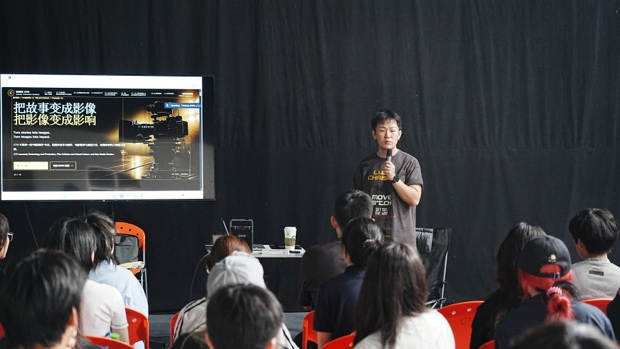
Getting to Know CTV: Exploring the Film and Television Major Through Its Curriculum
At the start of the event, Program Director Dr. Qi Li provided an overview of the CTV (Film and Television) major and its curriculum, helping students gain a deeper understanding of the program’s educational objectives and study structure.
Film and television production requires both an appreciation for the art of the moving image and a mastery of technical practice and teamwork. From a director’s initial vision and cinematography to sound recording and post-production editing, every stage is an integral part of the complete filmmaking process. Through this introduction, students gained a clearer perspective on the CTV curriculum and how classroom learning translates into practical, creative work.
For students currently considering their choice of major, truly understanding a field of study goes beyond simply looking at course titles—it requires grasping the specific skills and competencies that the curriculum is designed to foster. By clarifying the content and unique characteristics of the program, students are better equipped to make informed decisions that align with their personal interests, abilities, and future career aspirations.
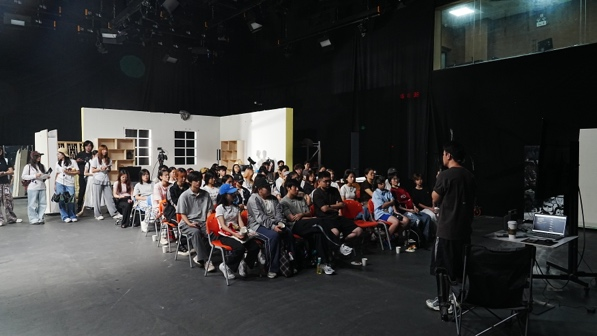
Get closer to film and television equipment: experience creation in practice
In addition to theoretical study, hands-on contact with professional equipment is also an important way to understand film and television creation.
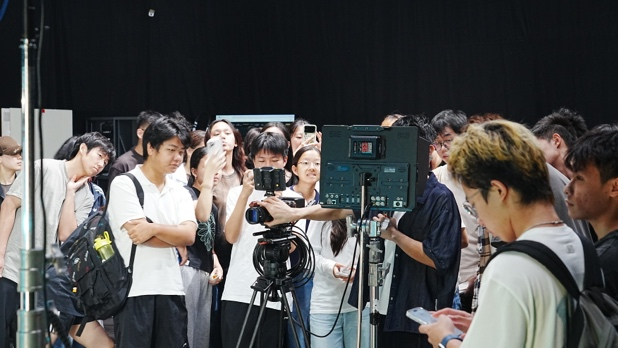
In the equipment experience session, Mr. Rick, the head of the equipment room, explained the relevant knowledge of film and television equipment to the students and provided opportunities for hands-on operation, allowing everyone to get a close understanding of the professional equipment commonly used in film and television production.
From the basic functions of the equipment to actual operation, equipment experience helps students establish an intuitive understanding of the technical aspects of film and television production. Photography, recording and other work require not only creative ideas, but also an understanding of equipment performance and operation methods. Through personal experience, students can further experience the practical characteristics of the film and television major and explore how technical tools serve image expression.
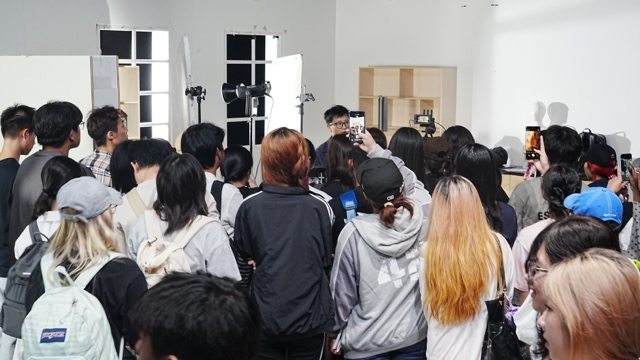
Stepping into Professional Spaces: Exploring Behind-the-Scenes Film and Television Production
As part of the scheduled activities, students toured the specialized teaching and practical facilities for the CTV (Film and Television) program—including screening rooms and professional editing suites—gaining a deeper understanding of the learning environments and equipment essential for film and television production.
The journey of a film or television project, from initial concept to final completion, involves several stages, such as filming, organizing raw footage, editing, and post-production. Each specialized space is designed for specific creative tasks, providing the necessary support for students as they work on course assignments and practical projects.
From Campus to the Future: Insights from Outstanding Graduates
In a session dedicated to sharing experiences, alumni—Lao Yijia (Class of 2026, currently at King’s College London) and Yin Yue and Li Muhan (Class of 2025, currently at New York University)—offered guidance and answered questions for current students. Their insights covered topics such as academic study, higher education planning, and future career development, providing a valuable reference for students currently navigating the process of selecting their area of specialization.
Once a major is chosen, how should one plan their university studies? How can one build a portfolio and gain practical experience? After graduation, should one pursue a postgraduate degree, join a film or television production crew, or explore other professional paths? These are all questions that weigh on the minds of many students as they make their academic choices.
These alumni perspectives offer students a window into various developmental trajectories, providing an opportunity to draw inspiration from the academic journeys and personal growth of those who have gone before them. Since every individual possesses unique interests, abilities, and goals, there is no single, definitive answer when it comes to one’s future path.
Starting with Interests, Finding Direction Through Practice
From overviews of specialized courses and hands-on experience with film and television equipment to tours of teaching facilities and insights shared by graduates, this CTV program information session offered students a comprehensive look at the curriculum, practical learning environment, and future career possibilities within the field of film and television.
Choosing a specialization is more than just a decision—it is the starting point for exploring one’s own interests and capabilities. For students passionate about film, imagery, and audiovisual expression, gaining a true understanding of the program, engaging proactively in creative practice, and reflecting on future paths are essential steps in making an informed choice.
We hope this event has helped students gain a deeper understanding of the CTV program, enabling them to identify a path that aligns with their personal goals—and to carry their passion for imagery and spirit of exploration into their future studies.
Making a choice begins with understanding; creativity flourishes through practice. We look forward to meeting more students who share a passion for the moving image here in the CTV program.
©2024-2025 Beijing Normal-Hong Kong Baptist University(BNBU).All Rights Reserved.粤ICP备07509519号粤公网安备44049102496044.
