
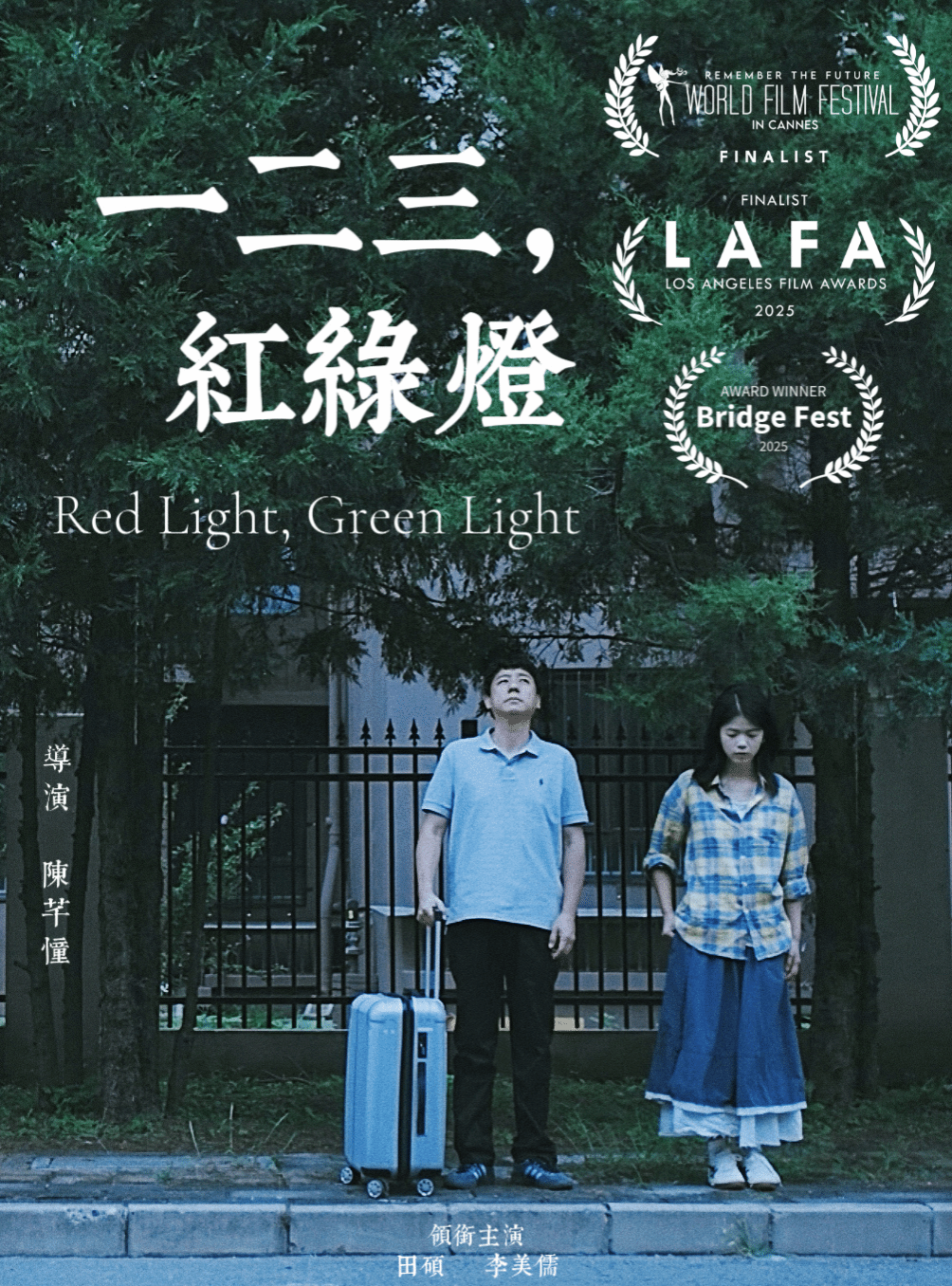
—— Sometimes, the quality of life matters more than its length. Learning to say goodbye, and facing the end of life with peace, is part of being human. Letting go, and making peace with what we hold dear, is a lesson we all must learn.
The director of this film, Chen Qianchong, is a student of 2022 cohort of Cinema and Television programme at BNBU. Her microfilm One, Two, Three, Traffic Light receive multiple accolades: Finalist in Cannes World Film Festival、Finalist in Los Angeles Film Awards、Best Artistic Short Film & Best Editing in Bridge Fest Vancouver (Short Film Category)
The film mainly talks about a daughter, tormented by advanced osteosarcoma, wishes to end her life through euthanasia but doesn't know how to break the news to her father, her only family. What she doesn't know is that her father has already discovered her secret. He has been testing the waters, trying in subtle ways to persuade her to stay. Along their journey together, they reminisce about childhood games, and through their conversations, delve deeper into the meaning of life.
Red Light, Green Light is a film I created in Beijing in 2025. The inspiration for this short film came from a real news story the director read two years ago. The report told of a young woman in Shanghai suffering from severe lupus erythematosus. In the later stages of her treatment, she endured immense pain from her illness. After a long period of inner struggle, she ultimately chose euthanasia to end her life.
During her final days, instead of sinking into despair, the woman lived each day mindfully. She continued posting daily moments with her beloved father on social media, gently seeing out the final chapter of her life.
The director admits this true story made him rethink the meaning of life and motivated him to adapt it into a short film. He raises a thought-provoking question: which matters more, the length or the quality of life? For most families, their only wish is for their sick loved ones to keep living. Yet for terminal patients suffering relentlessly, the simple phrase “stay alive” can feel unbearably heavy, signifying endless torment. Rather than clinging to life in agony on a hospital bed, patients may wish to spend their remaining time opening up to their families, visiting places they have always wanted to see, and witnessing sunrise and sunset once more, ending their journey with dignity.
The director also notes that losing a family member is a grave and solemn matter. Patients and their loved ones often hold vastly different perspectives on death and dying. In the current social context of China, many families hold traditional views, and public opinion on euthanasia remains largely negative.
For this reason, the director hopes the short film will bring the topics of illness, suffering and end-of-life choices back into public view. Through cinema, he shares his reflections and invites wider discussion on the quality of life, end-of-life decisions and attitudes toward death.
©2024-2025 Beijing Normal-Hong Kong Baptist University(BNBU).All Rights Reserved.粤ICP备07509519号粤公网安备44049102496044.
